Solar Ricardo

Solar Ricardo
Showing posts with label Futurist. Show all posts

Monday, August 31, 2015

The Dymaxion House: The Tiny House of the Future, circa 1930

Buckminster Fuller understood the need for a move to tiny houses. Unfortunately for Fuller (and the rest of us), he was 80 years ahead of his time.

BlogIMG_0524
In the past 10 years, tiny houses have become extremely trendy, and not without good reason. The real estate market has proven to be turbulent, to say the least. Down-sizing to live within your means is a concept that is increasingly popular not only among millennials, but with their aging baby boomer parents as well.

Tiny houses – compact, single family dwellings under 400 square feet– stand in stark contrast to the American trend toward larger and larger homes that started in the 1970’s and peaked in the early 2000’s. The current fad in tiny houses utilizes highly designed, compact interior spaces that include most, if not all of the modern conveniences, while maintaining a very traditional, cute cottage exterior appearance that makes them more enticing to tiny house newbies. Despite their small footprint, tiny houses retain a warm, cozy feel, which is key to their appeal.

This charm factor, or more precisely the lack of perceived charm, may have lead to the demise of an early 20th century precursor to the tiny house movement of today. In 1930, visionary architect R. Buckminster Fuller designed the Dymaxion House, an 1,100 square foot cylindrical aluminum yurt-like dwelling that is as radical today as it was in the last century.
Read More

Friday, August 7, 2015

3D printers – Next Big Thing, or High-Dollar Techie Toy?

There is a whole lotta buzz out there about 3D printers right now. Folks are saying that 3D printing could be heralding in an era of “desktop manufacturing” echoing the major successes of desktop publishing in the 80’s, and desktop video in the 90’s. But is this fuhreals? Can the 3D printer unleash a new era of good ol’ American ingenuity?
A finished print– A cover for a Raspberry Pi computer.

I’ve had the opportunity to get up-close and personal with a couple of 3D printers lately at the Iowa Innovation Learning Center in Hiawatha, Iowa. I got the chance to develop and print my own original designs, as well as open source designs from sites like Thingiverse.com. I gotta say, this technology is serious FUN. Is it ready to save America’s manufacturing economy from the onslaught of CCC (Cheap Chinese Crap)? Honestly, probably not, but I do think that this scrappy upstart tech has some serious potential.
 Read More


Wednesday, July 15, 2015

Makers” and the Future of Sustainable Industry

In the coming year, the MUM Sustainable Living department will be launching a new class that will introduce students to the “Maker” movement and the growing culture of DIY (do it yourself) technology. Some might ask, “how do electronics, robotics and 3D printing fit into the concept of sustainability?”

When thinking about “sustainable living,” many of us visualize organic farming, natural building and solar energy. However, unlike the “back to the land” movement of the 1970s, the new generation of “tiny house” dwellers and organic farmers depend heavily on...

Wednesday, November 26, 2014

Solar Values = American Values

“By the way, if you want to have a war over oil, leave me out of it- because I don’t think we need it. All I have to say is, go solar! Go wind! Let a little freedom into your life, and help your neighbors stay free, too.”
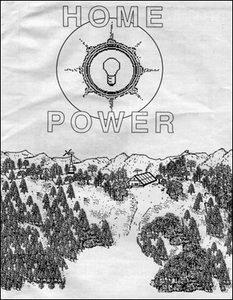
Richard Perez, Publisher, Home Power Magazine- keynote address, I-Renew Energy Expo, Sept.8, 2001
Home Power #1: 1987
Home Power #1: 1987

Just three days before the terrorist attacks that rocked the nation, Richard Perez, the publisher of the independent renewable energy publication Home Power addressed a packed audience at one of the nations oldest gatherings of wind and solar power enthusiasts. He inspired the audience with a talk about the importance of freedom. Freedom to make one’s own choices, and accepting the responsibilities that come with that freedom. It has been more than 13 years since Perez gave that speech and the solar landscape has changed immensely. Solar is no longer primarily the purview of off-grid survivalists and back-to-the-land hippies. The installed price of solar has dropped from above $10 per watt to under $4. More states around the nation are encouraging solar development, and the economic benefits of solar are becoming more obvious by the day. And yet, there remains a strong anti-solar contingent in the United States. But why? In post-911 America, isn’t freedom still an American value?

E-Prime: It's not for (Semantic) Wimps! OR E-Prime: (Semantic) Wimps may not find it to their liking!

 Okay! Speaking E-Prime for a whole week can be harder than one might think! Yes, it may be! Or maybe it really is!

"To Be" in Their Bonnets

A matter of semantics  
A few days ago I opened up a recent issue (Volume 48, Number 2) of Et cetera, the quarterly journal of the International Society for General Semantics, and within a few minutes of doing so got a bit of a surprise. The surprise came from an article by Emory Menefee, a former president of the ISGS, which bluntly calls into question attempts by many society members to promote something called E-Prime, a form of English that has for years ranked extremely high among the interests of the general-semantics community. Advocates of E-Prime, for reasons I'll come to, favor the elimination in English of every form of the verb "to be"—be, been, is, am, are, was, were, 'm, 's, 're, and all the rest. They not only promote E-Prime as a theoretical proposition but also try in daily life to erase to be and its inflections from everything they write. The most committed advocates use E-Prime even when they talk. Given all this, to see the E-Prime endeavor criticized in an official organ— to see that endeavor, indeed, termed "quixotic"—naturally raised an eyebrow. When I queried the International Society for General Semantics about the matter, the executive director, Paul Dennithorne Johnston, assured me that the society never did, and does not now, regard E-Prime as tantamount to some sort of "party line." Well, fine. But it has strong support among the nomenklatura, and I do not expect them to hold their peace.

Friday, November 21, 2014

"Futurists" and the Future of Solar Energy

"Their predictions range from near-term to long-term, from the mundane to the fantastic, but many futurists, regardless of their focus, see solar power in our future."

NASA.gov
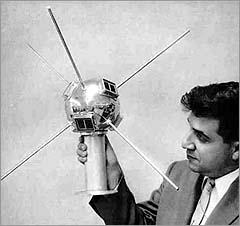
  In the realm of science fiction, solar has long played a role as a primary energy source in imaginary futures. Ever since Dr. Hans Zeigler outfitted satellite Vanguard 1 with photovoltaic panels back in 1958, solar energy has sparked writers imaginations. From the solar space-yachts of Aurthur C. Clarke's Sunjammer to the horrific solar-powered swarms of killer “nano-bots” in Michael Crichton's Prey, solar energy production is a technology that speculative fiction writers have always seen as part of our future. But what about the people who's job it is to PREDICT the future, rather than imagine it? What do “Futurists” think about the role solar energy will play in the coming century?
Vanguard 1  photo: Tommy Estrom
 Futurists, sometimes called “Futurologists” are those social scientists, economists and others analysts who spend their time examining current trends and studying future scenarios. They may work for governments, corporations and other organizations. They may be academics, business consultants, journalists or bloggers, and their focus may vary from economics to technology to human relationships, but most take an interdisciplinary approach to predicting the future. Their predictions range from near-term to long-term, from the mundane to the fantastic, but many futurists, regardless of their focus, see solar power in our future.

Read the entire article at Solar Tribune.